


Small blazes demand quick thinking and the right tool, and choosing between a fire blanket and an extinguisher can tilt the balance toward safety or trouble. Each item works on different principles, so knowing how they act, where they shine, and where they fall short helps when a flame shows up uninvited.
Training, environment, and the type of fuel feeding the fire shape the best response in the moment. A calm decision under pressure is often the ingredient that turns a bad situation into a story with a safe ending.
How Fire Blankets Work
A fire blanket is a sheet of fire resistant fabric that acts by cutting off oxygen to the flame and smothering the heat source. The user places the blanket over the burning object or wraps a person to halt combustion and protect skin while moving away.
Blankets are most effective on small spots of fire where full coverage is possible and quick action prevents spread. Their simplicity means little training is needed to try to put out a contained blaze without complicated steps.
How Fire Extinguishers Work
A fire extinguisher uses a propellant to eject an agent that interferes with the combustion process through cooling, smothering, or breaking chemical chains in the flame. Different agents are formulated for different fuel types and class codes label the extinguisher for appropriate use on solids, liquids, gases, and electrical sources.
Use involves pulling a pin, aiming the nozzle at the base of the fire, squeezing the handle, and sweeping from side to side until the flame is under control. The tools are effective across a wider range of situations than a blanket because the extinguishing medium reaches areas a sheet cannot cover.
Where Blankets Excel
Blankets shine in clothing fires and small kitchen incidents like a flaming pan where immediate smothering quickly cuts off oxygen and stops injury. They are compact enough to store near cooking areas and simple enough for almost anyone to deploy without training in a matter of seconds.
The Cobra Fire Blanket eliminates chemical cleanup, making it a practical choice for busy kitchens. For very localized fires, a blanket often beats a clumsy spray that can scatter burning liquid or ash.
Where Extinguishers Excel
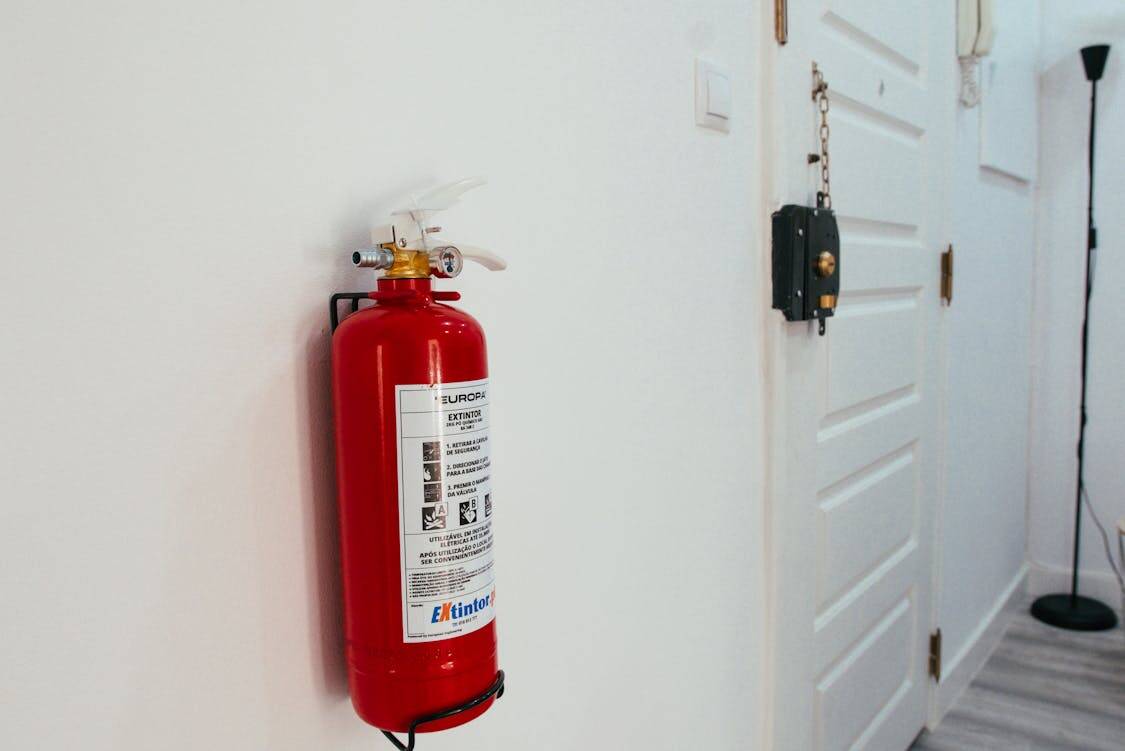
Extinguishers handle a broader range of fire sizes and fuel types in situations where covering the source is impossible or unsafe, for instance a blaze that has spread into a wall cavity or along furniture. They provide a directed stream that reaches flames hidden from view and put out hotspots that a blanket cannot touch.
Certain agents work on electrical faults without conducting, and others tackle grease or flammable liquid fires with more control than trying to smother them by hand. In a larger space where speed and reach matter, an extinguisher is usually the safer bet when wielded by someone who knows how to use it.
Limitations Of Fire Blankets
A blanket is only as useful as its size and coverage, and once a flame grows beyond what can be fully covered, the blanket loses effectiveness and becomes a hazard. Attempts to smother a deep seated or high temperature blaze can transfer extreme heat to whoever holds the fabric, creating burn risk for the rescuer.
Blankets do not cool the fuel or stop chemical reactions that continue under the surface, which means re ignition of hot material is possible once the sheet is removed. They are not suitable for certain liquid or explosive scenarios where displacement of fuel will spread the hazard.
Limitations Of Extinguishers
An extinguisher provides a finite amount of agent that can run out in seconds, after which the fire might still be active and the operator is left vulnerable. Using the wrong type of agent on a particular fuel can worsen the situation by spreading burning liquids or failing to cut the reaction at its source.
Extinguishers require some basic know how to aim at the base of the fire, and panic driven misuse can agitate flames rather than tame them. Maintenance and periodic checks are mandatory because a non charged unit is worthless when urgency arrives.
Safety And Ease Of Use
A blanket requires minimal sequence and is intuitive for untrained hands to drape over a small fire or wrap a person whose clothing has ignited, which makes it a valuable first line item in homes and kitchens.
Extinguishers ask for a short procedure that becomes second nature after practice but can be daunting in a high stress moment if someone has never pulled a pin and aimed at a base.
Both tools carry risks when misapplied, such as suffocation hazard with a poorly placed blanket or inhalation of particulate when using a powdered extinguisher in a confined area. Choosing a device that the likely user is comfortable handling increases the chance of a safe outcome more than selecting the most technically capable item.
Maintenance And Lifespan
Fire blankets are low maintenance in the sense that they do not need pressurization checks, though occasional inspection for tears, contamination, or heat damage is wise after any use.
Extinguishers have service intervals, pressure tests, and replacement schedules that must be followed to keep them functional, and a neglected cylinder is little more than a heavy can.
Both tools require clear signage and accessible storage so that whoever needs them will reach them fast without tripping over clutter. Treating either device like a neglected tool reduces its reliability when seconds count.
Cost And Accessibility
Blankets are typically cheaper to acquire and replace, which makes them an attractive option for multiple locations inside a home or small workplace where budget is a factor. Extinguishers cost more up front and incur inspection and recharge expenses, but they also cover a wider set of scenarios so a single unit can protect a larger space.
Widespread availability of blankets encourages placement near key risk points while trained staff can be assigned responsibility for extinguisher maintenance and use. Both types should be matched to the environment so dollars spent buy practical protection rather than a false sense of security.
Choosing The Right Tool For The Situation
A good rule of thumb is to use a blanket on small, contained fires and when a person is on fire because the sheet offers rapid suppression and direct protection for the body.
Reach for an extinguisher when flames have room to spread, when sources are out of reach for a blanket, or when the fuel type calls for a specific chemical agent that stops combustion more reliably.
Always plan the escape route before taking action so the scene does not trap the rescuer, and if the fire escalates without control, evacuate and let trained responders take over. Better safe than sorry is a solid motto here; the right tool used smartly is the ticket to a safer outcome.


